
What this classification means
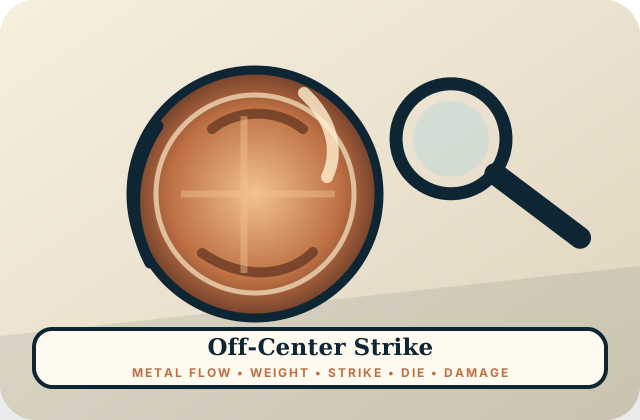
The planchet is not fully positioned between the dies, leaving part of the design missing and an unstruck crescent. A useful identification does more than name an unusual shape. It explains when in production the feature formed, what physical evidence should remain, and which ordinary forms of damage can imitate it.
Diagnostic evidence to record
Estimate percentage off center, record clock position, inspect metal flow, edge and collar evidence, and whether the date remains visible.
- Compare with certified examples and mint-production references, not viral price claims.
Common lookalikes and failure points
Clipped planchets, misaligned dies, cut coins, and damaged rims are commonly confused with off-center strikes.
A practical examination sequence
- Confirm the host coin. Identify denomination, design subtype, date, mint, composition, and expected weight.
- Describe before naming. Write what the metal actually does without using a marketplace label.
Value factors
Use United States Mint production references to understand how blanks, planchets, dies, collars, and presses work. Use major grading-service references to compare diagnostic language. Treat marketplace descriptions as leads to investigate.
Collector checklist and buying paths
A genuinely off-center strike shows part of the design displaced from its expected location. Other striking or handling faults can look superficially similar.
- Estimate displacement only after confirming the coin was struck off-center rather than merely misaligned.
- Check whether date and mint mark remain visible and whether the original surface is preserved.
- For unusual examples, consider professional authentication before relying on claimed rarity.
Explore matching examples on eBay
Research value: Review comparable completed sales ↗
Continue researching
Affiliate disclosure: We may earn a commission on qualifying eBay purchases. Seller listings are not endorsements or proof of authenticity. Check condition and seller policies. Completed sales are research, not an appraisal.