
What this classification means
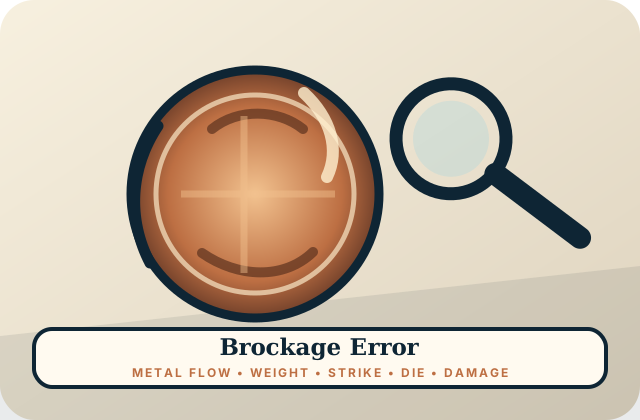
A struck coin sticks to a die and impresses an incuse mirror image onto the next planchet. A useful identification does more than name an unusual shape. It explains when in production the feature formed, what physical evidence should remain, and which ordinary forms of damage can imitate it.
Diagnostic evidence to record
A genuine brockage should be incuse, mirrored, correctly aligned, and physically consistent with a struck coin acting as a die cap.
- Compare with certified examples and mint-production references, not viral price claims.
Common lookalikes and failure points
Vise jobs produce incuse images but often show impossible edge pressure, wrong alignment, and disturbed metal.
A practical examination sequence
- Confirm the host coin. Identify denomination, design subtype, date, mint, composition, and expected weight.
- Describe before naming. Write what the metal actually does without using a marketplace label.
Value factors
Use United States Mint production references to understand how blanks, planchets, dies, collars, and presses work. Use major grading-service references to compare diagnostic language. Treat marketplace descriptions as leads to investigate.
Collector checklist and buying paths
A brockage is caused by an already-struck coin or impression interacting with a later strike. It should not be confused with damage that merely resembles reversed lettering.
- Check for an incuse mirrored design consistent with the host coin rather than a scratched imitation.
- Examine the normal and brockage faces together; incomplete photo sets invite misidentification.
- Verify unusual specimens with trusted numismatic references or third-party attribution.
Explore matching examples on eBay
Research value: Review comparable completed sales ↗
Continue researching
Affiliate disclosure: We may earn a commission on qualifying eBay purchases. Seller listings are not endorsements or proof of authenticity. Check condition and seller policies. Completed sales are research, not an appraisal.